Outdoor seating revenue is one of the most under-optimised assets in European hospitality. In the UK, Germany, the Netherlands, and across Northern Europe, most outdoor seating areas generate revenue for roughly 90–120 days per year in reliable weather. For the remaining 245 days, they sit empty, or worse, they detract from the guest experience when tables are unused or miserable in poor weather.
A retractable roof system doesn’t just solve a weather problem — it solves a revenue problem. The venues that have invested in quality motorised outdoor coverage are consistently reporting extended season lengths of 4–6 months and meaningful year-on-year revenue uplifts from their outdoor areas. This article makes the commercial case clearly and gives you the framework to evaluate whether the investment is right for your venue.
The Revenue Maths: A Straightforward Calculation
Consider a restaurant with an outdoor terrace seating 40 covers. In a typical UK year, uncovered outdoor seating is reliably usable for approximately 100 days. With a quality retractable roof system and optional side wind screens, that extends to approximately 220–240 days — the shoulder seasons of March through May and September through November become genuinely serviceable.
That represents an additional 120–140 trading days for 40 covers. At an average lunchtime or dinner spend of £35 per cover (conservative for a mid-market restaurant), and assuming an average of 60 covers per service and 1.5 services per day on the additional days, the incremental revenue potential is substantial. Even at 50% occupancy on the additional days, the numbers build a compelling payback case within 2–3 trading seasons for most venues.
The right question is not ‘can we afford this?’ but ‘what is the cost of the revenue we are leaving on the table each year without it?’
Beyond Revenue: What Quality Outdoor Coverage Does for Guest Experience
Revenue is the business case. Guest experience is the brand case. Covered outdoor spaces — when properly designed — are consistently rated by hospitality guests as premium amenities. TripAdvisor and Google Reviews data consistently shows that restaurants and bars with attractive, well-managed outdoor spaces receive higher scores and more positive comments about atmosphere and comfort.
The critical word is ‘attractive’. A canvas gazebo from a garden centre, a cheap parasol arrangement, or a temporary awning that rattles in the breeze does not deliver the experience premium. A quality aluminium retractable pergola with LED lighting, heating, and smart controls delivers an experience that is architecturally coherent with the interior and that signals investment in guest comfort. This is the difference between a covered terrace as a compromise and a covered terrace as a destination.
What to Specify for a Commercial Installation
Commercial specifications differ from residential ones in several important ways. Here is a checklist of the key points to address with your supplier:
- Span capability and modular linking — commercial terraces are often 60m² or more. Ensure the system can cover your full terrace footprint, either as a single large-span unit or as linked modular bays. Maximum single-bay projections typically reach 5–6m; wider terraces require linked systems or intermediate posts. Discuss post placement carefully to avoid disrupting table layout.
- Wind and rain rating — commercial installations are exposed to guests, staff, and liability considerations. Specify minimum wind resistance testing (Class 4 or above to EN 13561) and confirm the fabric or louvre system is rated as waterproof (not merely water-resistant).
- Automation and ease of operation — staff should not need to actively manage the roof during service. Fully automated systems with weather sensors are the commercial-grade standard. Manual operation is not appropriate in a service environment.
- Electrical infrastructure — commercial retractable roofs with integrated LED lighting, heating, and multiple control zones require significant electrical planning. Engage your electrician early and ensure the supply cable size, fuse board allocation, and IP-rated components are all specified correctly.
- LED lighting specification — warm white LED (2700K–3000K colour temperature) delivers the most flattering hospitality atmosphere. Avoid cool white (5000K+). Dimmability is essential for managing the transition from day to evening service.
- Fire safety compliance — in hospitality settings, materials must comply with commercial fire safety standards. Confirm that fabrics and any insulation products used meet Class B or better (EN 13501-1) reaction to fire requirements.
- Warranty and service contract — commercial systems should come with a minimum 5-year mechanical warranty and access to a service contract for annual inspection and preventive maintenance. Downtime during peak season is not acceptable; a service agreement reduces this risk.
Real-World Applications Across Hospitality Sectors
Restaurants and Cafés
The most common and straightforward commercial application. A retractable roof over the outdoor seating area — combined with side screens or glass panels — allows year-round service in what would otherwise be a three-season space. The financial case is most direct here. Configurations range from simple lean-to roof systems on narrow terrace strips to large freestanding multi-bay structures covering courtyard and garden dining areas.
Hotels and Resorts
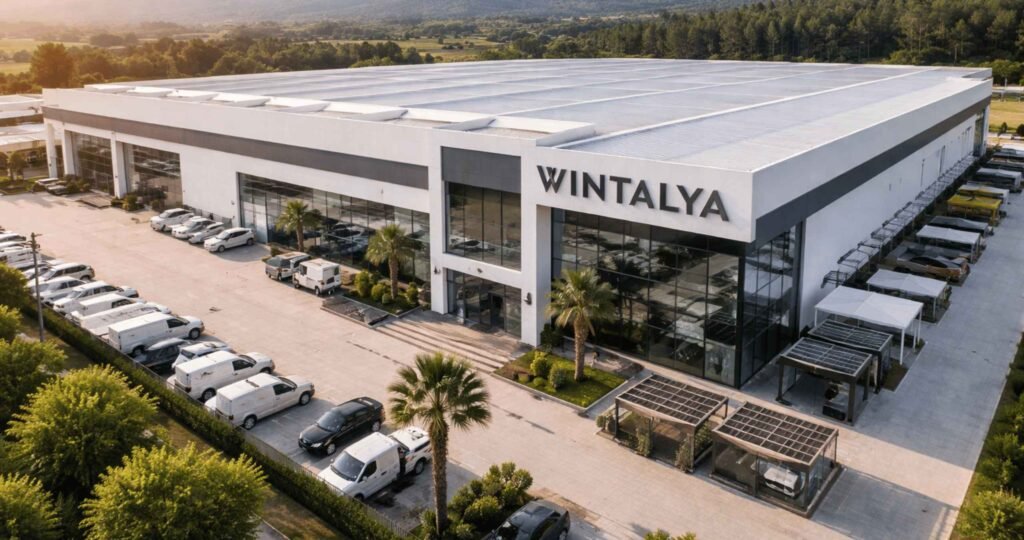
Hotels have multiple outdoor coverage needs: terrace bars, pool areas, event lawns, rooftop spaces, and spa terraces. Each requires a different specification. Pool and spa areas demand high humidity-resistance in materials. Event spaces need maximum clearspan with minimum post obstruction. Rooftop installations require structural engineering input to assess the building’s capacity for the load. Wintalya has experience across all hotel outdoor space categories, including luxury resort projects where aesthetic integration with the architecture is as important as technical performance.
Pubs and Beer Gardens
UK pubs have been among the fastest adopters of outdoor coverage systems, particularly following the extended periods when indoor hospitality was restricted. Beer garden retractable roof systems have extended trading periods significantly, and many operators report that their outdoor space has become their most profitable trading area per square metre when properly equipped. Heating is particularly important in this context — outdoor heater placement and specification should be part of the initial design, not an afterthought.
How to Get the Right Quote for Your Venue
A professional commercial outdoor coverage quote should include: a site survey and measured drawings of your terrace area; a structural loading assessment or confirmation of fixing requirements; a specification document naming products, materials, motor brands, and weather ratings; an electrical specification; an installation programme with duration; and a warranty document. If a supplier offers you a quote without having visited your site, treat it with significant caution.
✔ Planning to cover your restaurant terrace, hotel pool area, or commercial outdoor space? Wintalya provides full commercial project design, supply, and installation across Europe. Contact us to arrange a site consultation.